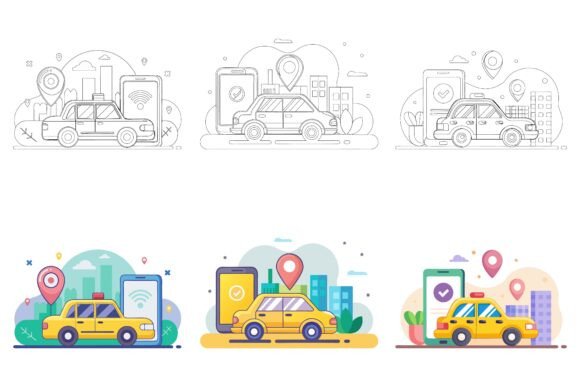
Smart Car Sharing: The On-Demand Vehicle for Modern Life
Imagine needing a car for a quick trip downtown, but your own vehicle is parked miles away at home. Or picture arriving in a new city for a business meeting and wanting a local, affordable way to get around without the hassle of rental desks and paperwork. This is the everyday reality Car Sharing Service Controlled Via Smart is designed to solve. It’s not just another app on your phone; it’s a practical tool that puts a vehicle at your fingertips exactly when you need it, managed entirely through your smartphone.
Where Smart Car Sharing Fits Into Your Day
The service thrives in situations where traditional car ownership or rental feels cumbersome or inefficient. It’s for the urban dweller who primarily walks or cycles but occasionally needs to haul groceries or visit a friend across town. It’s for the freelance consultant traveling between client offices in different suburbs, where public transport connections are slow. It’s even for the small business owner who needs to make a delivery but doesn’t want to invest in a dedicated fleet vehicle. The core idea is access over ownership, turning a car into a temporary utility you activate and pay for by the hour or mile.
From Errands to Entrepreneurship: Real-World Use Cases
Consider a graphic designer who has a last-minute client meeting. Their studio is in a creative district, but the client’s office is in an industrial park poorly served by buses. Booking a Car Sharing Service Controlled Via Smart for two hours allows them to arrive professionally, on time, and without the stress of finding parking for their personal car in a congested city center. The cost is a simple business expense, often cheaper than a full-day rental.
For families, the service can act as a secondary vehicle. When one partner has the family car at work, the other can still easily run to the hardware store for a home repair project or take a child to an unexpected dental appointment. It fills the gaps in household logistics without the long-term financial commitment of leasing or buying another car.
In educational settings, university students organizing a weekend hiking trip can book a vehicle suitable for their group, splitting the cost through the app. They avoid the complexities and high fees of traditional rental companies that often require premium insurance from younger drivers.
Why Control Via Smartphone Makes All the Difference
The “smart” control is what transforms the concept from a good idea into a usable one. You locate available vehicles parked in dedicated spots around your area, unlock them digitally, and drive. When finished, you park in a designated zone, lock the car via the app, and your rental ends. This seamless process eliminates key pick-up, physical contracts, and face-to-face interactions. It saves time, which is often the primary commodity users are trying to protect. The convenience factor is massive: you’re managing transportation in the same interface where you handle your calendar, communication, and payments.
What Different Users Gain From This Flexibility
The benefits vary by lifestyle. For the marketer or blogger covering local events, it means reliable transportation to different venues without worrying about parking tickets or mileage limits on a rented car. For the entrepreneur, it provides a scalable logistics solution; they can use a shared van for product deliveries during peak seasons without year-round overhead. Hobbyists, like those who need to transport bulky supplies for a gardening project or art installation, gain access to suitable vehicles (like small trucks) they wouldn’t normally own.
Even for everyday users without specialized needs, the benefit is financial clarity. You pay for what you use. There’s no depreciation, insurance premiums, or surprise maintenance costs hitting your budget. It turns car usage into a predictable, transactional expense.
Considering a Smart Car Sharing Service
Before you rely on a Car Sharing Service Controlled Via Smart, a few practical considerations will help you judge if it fits your patterns. First, assess your typical needs. Is it for frequent, short urban trips, or less frequent but longer journeys? The pricing models (per-minute/hour vs. per-mile) will suit different patterns. Check the service map in your city—are vehicles stationed conveniently near your home, work, or regular routes? If the nearest car is always a 20-minute walk away, the convenience erodes.
Think about vehicle types offered. Do they include options for your specific situations, like sedans for comfortable client meetings or larger vehicles for family trips? Also, honestly evaluate your own comfort with technology. The entire process is app-dependent, from booking to locking. While intuitive, it requires a smartphone and a degree of digital fluency.
Connecting Features to Real Outcomes
The features aren’t just a checklist; they enable specific outcomes. Neatly organized app and service structure means you spend less time figuring out how to book and more time actually moving. Perfection in details and consistency across the user experience translates to reliability—you don’t encounter confusing errors when you’re trying to get to an important appointment. The fact that the service is suitable for varied needs—whether for a commercial delivery (“print”) or a personal trip (“web” of your life)—means it can serve multiple roles for you over time. And the core idea that you can control it easily according to your needs is the ultimate benefit: it molds itself to your schedule, not the other way around.
Ultimately, Car Sharing Service Controlled Via Smart represents a shift in how we think about resources. It applies the on-demand model we use for music, video, and food to transportation. It’s for anyone whose life doesn’t fit the rigid pattern of owning a single vehicle parked in one fixed location. By focusing on real situations—from a sudden errand to a planned business need—it provides a concrete solution that is as flexible as the modern lifestyle demands.