Super Cute Body Parts Illustration Pack 03: A Creative Resource Built for Playful Visual Storytelling
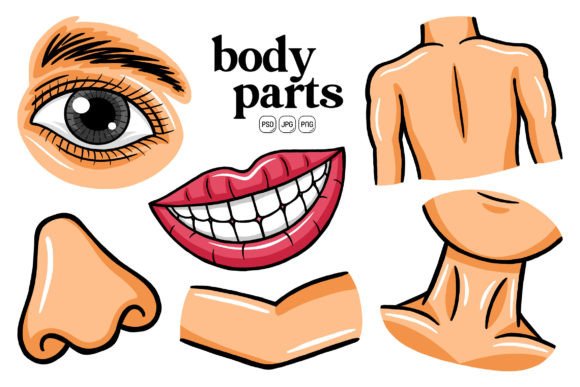
Working with visual content often means searching for that one asset that doesn’t just fill space but actually feels right. The Body Parts Illustration Pack 03 steps into that gap with a collection that leans hard into a super cute, character-driven art style. It isn’t about medical precision or cold anatomical diagrams. Instead, you get 100 original illustrations where hands wave, eyes wink, and feet have personality. Think of them as little storytelling tools rendered in a high-resolution flat design that practically begs to be customized.
What makes this pack stand out immediately is how editable it is. Every shape, every little blush on a cheek, every outline can be recolored or resized without losing quality. The native files come as layered PSDs with smart objects, meaning you can double-click a layer, change a color, and watch it update across your whole design. That alone changes how you approach everything from a last-minute social media post to a full-scale printed banner.
When Social Media Managers Need a Splash of Whimsy
Scrolling through feeds filled with stock photography gets tiring. A social media manager trying to stop thumbs from flicking past a post knows the value of a visual hook. A cute, smiling tooth holding a toothbrush or a happy pair of lungs doing a little dance brings an unexpected charm to health tips, wellness reminders, or even dental clinic promotions. The flat design style keeps everything crisp on mobile screens, where overly complex images can turn into visual noise.
Anyone running a wellness brand or a self-care account can pull individual illustrations from the Body Parts Illustration Pack 03 to build a consistent, friendly identity. Picture an Instagram carousel where a cheerful heart character introduces stress-management tips, or stories where a brain with tiny glasses points to a “swipe up” link for a meditation guide. Because every element lives on a separate layer and comes with transparent PNG options, dropping a character onto a pastel background and adding text takes seconds instead of hours.
Teachers and Educators Turning Abstract Ideas Into Friendly Visuals
Explaining how the human body works to young children invites a special kind of visual language. Realistic diagrams can feel cold or even a little scary. Early childhood educators and homeschooling parents often discover that a character-style stomach holding a piece of broccoli opens up conversations about digestion far more naturally than a clinical cross-section ever could.
The 5000 x 5000 pixel size and 600 DPI resolution give educators room to breathe. They can print large flashcards that stay sharp even when pinned to a classroom board across the room. A set of five senses illustrations — an oversized ear with tiny hearts floating toward it, a pointing hand, a winking eye — turns a science corner into an inviting space. Interactive worksheets become more engaging when students color in a cute liver or trace the path of a smiling red blood cell, activities made possible by the easy recolor options embedded in each file.
Healthcare Communicators Softening Sensitive Topics
Nobody wants to read a brochure that feels too clinical when they’re already nervous about a procedure. Pediatricians, therapists, and public health advocates often walk a fine line between informative and approachable. The character art style found here offers a middle ground. A friendly syringe illustration where the needle has a tiny, reassuring face does something powerful — it acknowledges fear while softening it.
Consider a mental health counselor designing a handout about body awareness. A set of illustrations showing a hand with a gentle smile, feet grounded with little roots, and a calm-looking stomach can visually communicate grounding techniques without words feeling heavy. Since you can change colors on every shape, branding these materials to match a clinic’s soft blues or calming greens takes just a few clicks inside Adobe Photoshop. The JPG files give standard printing reliability, while the PNGs with transparent backgrounds let designers layer characters onto existing letterhead or appointment cards without awkward white boxes.
Product Designers and App Developers Building Playful Interfaces
Gamification and friendly UI elements keep users inside apps longer. A fitness app doesn’t have to rely on cold muscle diagrams. Imagine achievement badges featuring a flexing bicep that actually smiles back at the user. Or onboarding screens where a brain character with a lightbulb guides someone through setting up a meditation timer.
The smart object layers inside the PSD files make this pack surprisingly useful for UI designers who need to iterate quickly. You drop in a leg illustration for a “step count” icon. The product manager decides the app palette shifted from orange to teal. Instead of requesting new assets, the designer opens the smart object, adjusts the hue, saves, and watches the entire app mockup update consistently. The high pixel dimensions future-proof these assets for retina displays and beyond. An independent developer creating a children’s educational game can combine different elements — an eye, an ear, a hand — arranging them into custom reward screens without licensing new art every time an idea scales.
Print Material That Needs Personality Without Losing Clarity
Local community centers, yoga studios, and wellness fairs often run on tight budgets where custom illustration feels out of reach. A flyer advertising a “Listen to Your Body” workshop suddenly feels more inviting with a cute ear character beside the headline. Tote bag designs, sticker sheets, and window decals all benefit from artwork that stays readable at different sizes.
The 600 DPI resolution handles professional printing demands comfortably. A small business owner printing vinyl stickers of a smiling foot for a reflexology clinic can do so with confidence that edges stay crisp. Because you receive both layered PSD and flat JPG and PNG formats, the workflow adapts to different skill levels. Someone comfortable in Photoshop dives into layers and smart objects, while someone just needing a quick image for a community board print uses the high-res JPG straight from the folder. The transparent PNGs let a small stationery shop owner overlay a kidney character with a tea cup onto a thank-you card design, creating something that feels custom-made without starting from scratch.
Crafters and DIY Enthusiasts Finding Unexpected Materials
This pack crosses over into physical making in ways that might not seem obvious at first. Sublimation printing, card making, and scrapbooking all thrive on cheerful character art. Someone designing iron-on transfers for a children’s clothing line can take the individual organ illustrations, recolor them in bright, playful shades, and arrange them into patterns. The cheeky appendix character waving from a toddler’s shirt becomes a conversation piece for parents in the know.
Digital planners and printable sticker shops on Etsy benefit enormously from packs like this. A creator selling “My Body” learning kits can layer the 100 illustrations onto pre-formatted sticker sheets, circle time posters, and reward charts. Because the license allows combining elements to create new illustrations, a sticker designer could place a smiling heart next to a happy pair of lungs and group them under a “Things That Keep Me Running” theme. That sort of recombination becomes a creative playground limited mostly by what stories the designer wants to tell.
What to Keep in Mind When Working With This Style
The super cute aesthetic carries a specific tone. It works beautifully for warm, approachable, or playful contexts. A legal firm explaining workplace injury protocols probably won’t find the right visual partner here. The strength of the Body Parts Illustration Pack 03 lies in its charm, and that charm shines brightest when the message and audience welcome a little joy.
Color customization is flexible but does require some familiarity with Adobe Photoshop to unlock the full smart object workflow. Users comfortable navigating layers and adjustment tools will feel right at home. Those newer to Photoshop can still use the provided PNG and JPG files directly, though they’ll miss out on the deepest customization. The 100 illustrations cover a wide range of body parts, but anyone needing hyper-specialized anatomical accuracy for medical textbooks should look toward reference-grade sources instead.
File management deserves a quick mention. One hundred high-resolution illustrations across multiple formats means the download folder has some weight. Organizing them into subfolders by body system or character type early saves hunting time later. Naming conventions like “Heart_Happy_Transparent.png” make search faster when deadlines loom. The joy of this pack partly lives in how quickly you can grab what you need, and a little upfront organization pays back many times over.
The real magic of this illustration collection reveals itself when someone stops thinking of it as clip art and starts treating it as a cast of characters. That dancing tooth, that shy little stomach, those lungs giving a thumbs up — they carry an emotional tone that connects faster than text ever could. When a brand, classroom, or app can communicate warmth before the first word lands, the visual choice already did its job.