The Convergence of Science and Style: Anatomical Heart Vector Art in the Modern Marketplace
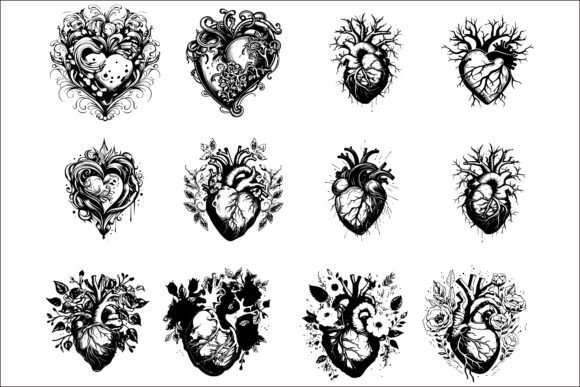
In the contemporary creative and professional landscape, the fusion of specialized knowledge and aesthetic expression is increasingly valuable. At the forefront of this convergence is Anatomical Heart Vector Art. This represents not merely a static image but a meticulously crafted digital illustration of the human heart, rendered with scientific accuracy and artistic nuance. Unlike a simple photograph or a basic graphic, this form of artwork is built within vector software, resulting in a scalable, editable, and versatile asset. The final product—a detailed anatomical heart illustration—serves as a bridge between the rigorous world of medical education and the dynamic realms of design, marketing, and lifestyle branding.
Beyond the Medical Textbook: A Multi-Domain Asset
The relevance of Anatomical Heart Vector Art today stems from its unique position across several intersecting trends. The democratization of design tools and the rise of niche marketing have empowered professionals and creators to seek assets that are both authoritative and adaptable. A realistic anatomical heart diagram no longer resides solely in academic journals; it is a component of modern visual communication. This reflects a broader industry shift where specialized content is repurposed to meet diverse audience needs, from enhancing professional credibility to building brand identity around shared passions, such as science or vintage aesthetics.
The Core of Its Appeal: Precision Meets Versatility
Why is Anatomical Heart Vector Art garnering such attention? The answer lies in changing workflows and expectations. Creators, entrepreneurs, and marketers now require assets that are high-quality, legally clear for commercial use, and effortlessly integrable into various projects. A collection offering editable EPS files, transparent PNGs, and high-resolution JPGs directly addresses this need for operational efficiency. The vector format’s infinite scalability ensures the artwork remains pristine on a business card or a large-format banner, eliminating technical barriers that once hindered creative execution. This practicality, paired with the inherent intellectual and aesthetic weight of the subject matter, makes it a powerful tool.
Practical Applications: From Commerce to Education
The utility of Anatomical Heart Vector Art is best understood through its concrete applications. These uses highlight how a single, well-crafted asset can serve multiple markets and fulfill evolving preferences.
1. Wearable Science: Apparel Design
The integration of a detailed anatomical heart illustration into T-shirts, hoodies, and apparel is a prime example of lifestyle branding tapping into community identity. This design trend moves beyond generic graphics, offering a symbol of expertise, passion, or alternative style. The target audience—medical students, practitioners, biology enthusiasts, and those in gothic or alternative fashion—seeks apparel that communicates a deeper personal or professional narrative. The artwork acts as a badge of belonging, transforming a scientific diagram into a statement of individual or collective identity.
2. Environmental Narrative: Posters and Wall Art
Turning this vector art into posters and framed decor speaks to the growing desire to curate environments with meaning. In homes, it adds a layer of sophisticated, intellectual character. In professional settings like clinics or offices, a vintage anatomical heart print reinforces the space’s purpose and ethos, blending education with classic design. This application caters to medical professionals, science enthusiasts, and interior design buyers who value authenticity and thematic cohesion in their spaces, moving away from purely decorative art toward pieces that tell a story.
3. Enhancing Comprehension: Medical and Educational Materials
Perhaps its most direct application is in creating enhanced educational resources. The vector art forms the perfect foundation for infographics, anatomy diagrams, study guides, and patient communication materials. For educators, freelance instructional designers, or medical institutions, the ability to customize and build upon a scientific illustration of the anatomical heart streamlines content creation. It meets the modern expectation for clear, visually engaging, and professionally accurate educational aids, crucial in both academic and clinical contexts.
Connecting to Larger Developments
The demand for such assets is inextricably linked to larger technological and cultural developments. The expansion of print-on-demand services and e-commerce platforms allows niche products featuring this art to reach global audiences effortlessly. Simultaneously, the "maker" and freelance economy empowers individuals to build small businesses or enhance their professional offerings with high-quality, specialized graphics. Furthermore, in an era of information overload, clear, authoritative visuals like an artistic rendering of the anatomical heart become critical for effective communication, whether explaining a health concept or branding a science-themed product.
Ultimately, Anatomical Heart Vector Art is more than a set of files; it is a versatile key unlocking numerous creative and professional doors. Its significance lies in its dual nature: it carries the undeniable authority of medical science while offering the limitless flexibility of modern digital design. For the professional, creator, or marketer seeking to produce work with depth, clarity, and visual impact, integrating such an asset is a strategic, forward-looking choice that aligns with today’s integrated approach to knowledge, business, and style.